Riad Tizwa Marrakech
Marrakech, Morocco · 4-star Riad
Riad Tizwa Marrakech in photographs
When to go
The cheapest month we have found is January, at around USD 124 a night - -30% against what this hotel usually asks.
Where to book
- Book on Booking.com - Free cancellation options, guest reviews and a familiar checkout.
- Hotel website - Photos, facilities and location.
Our notes
A white house behind a plain door
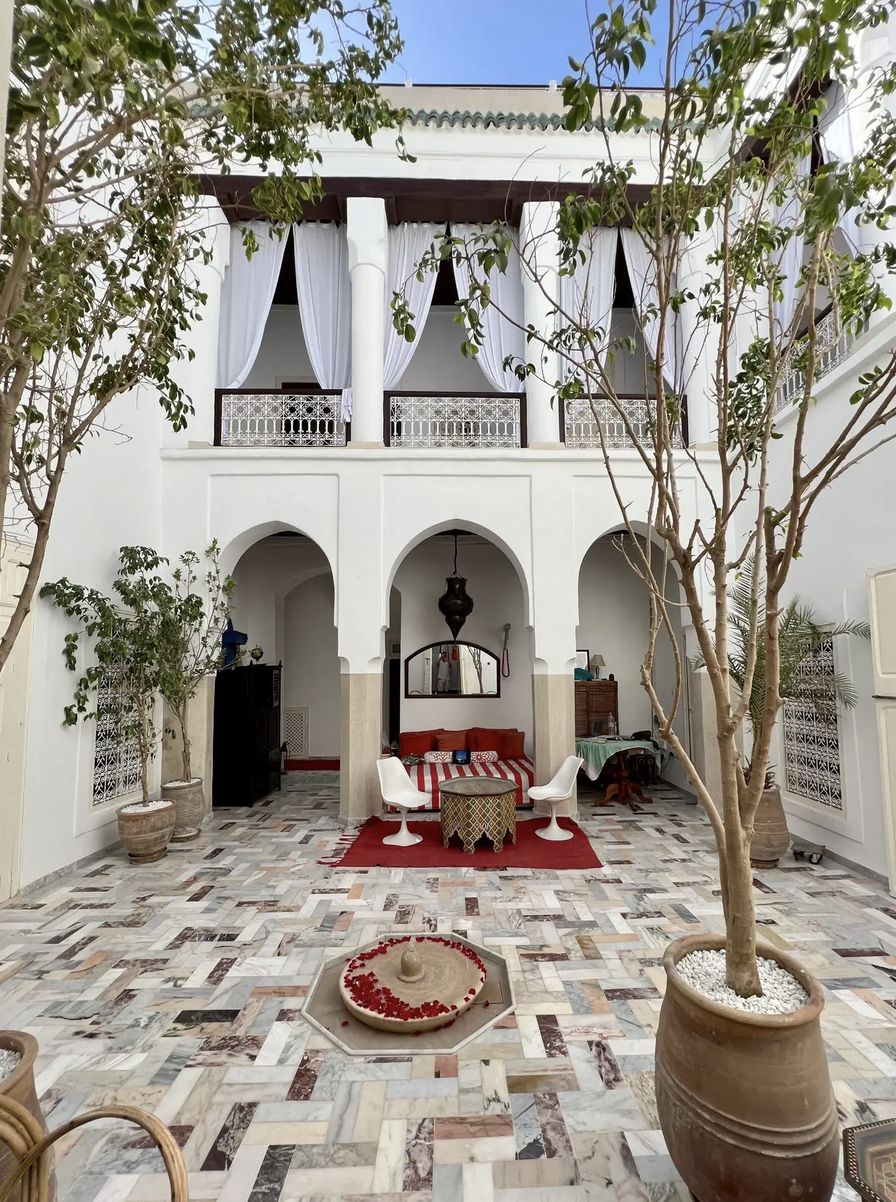
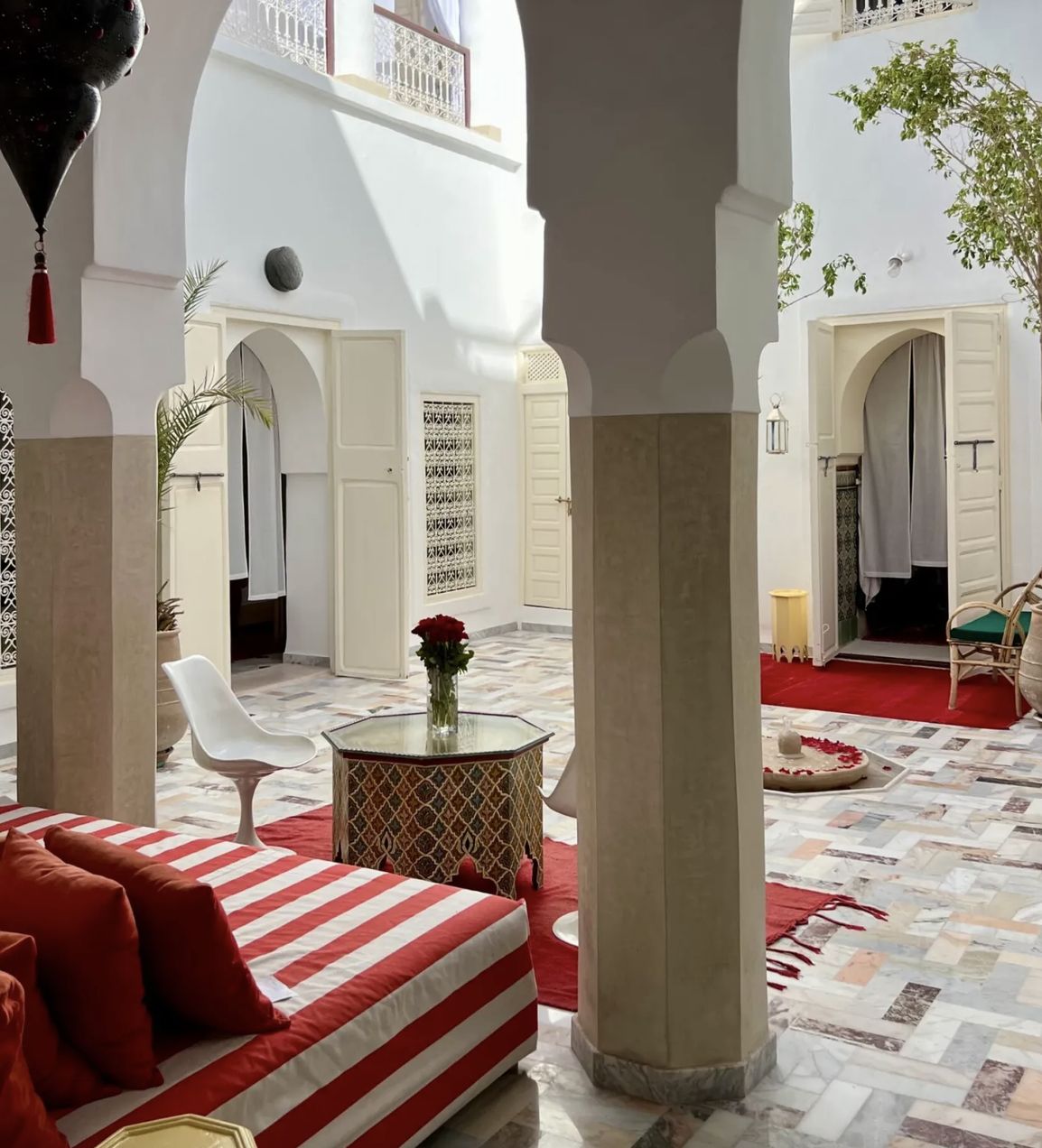
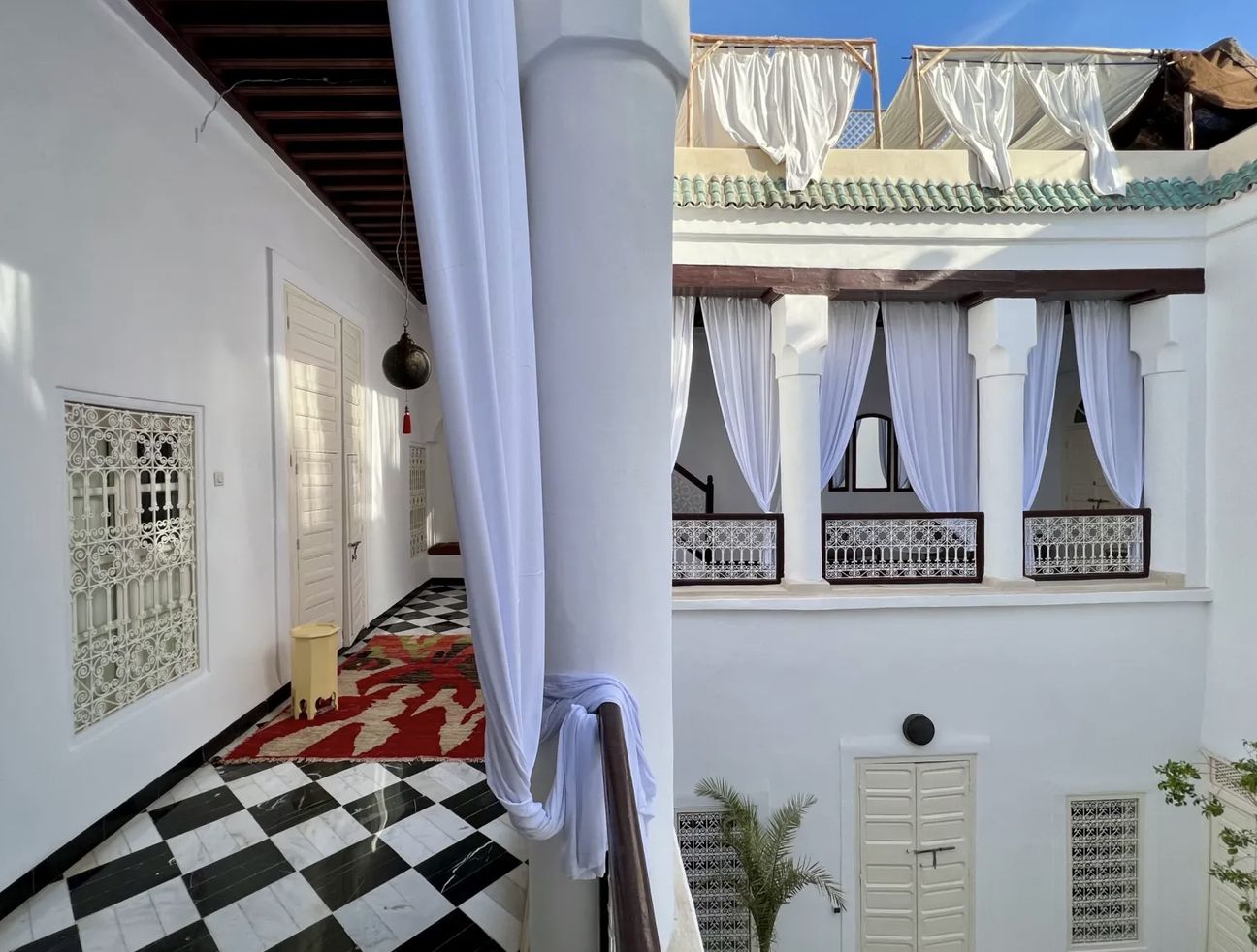
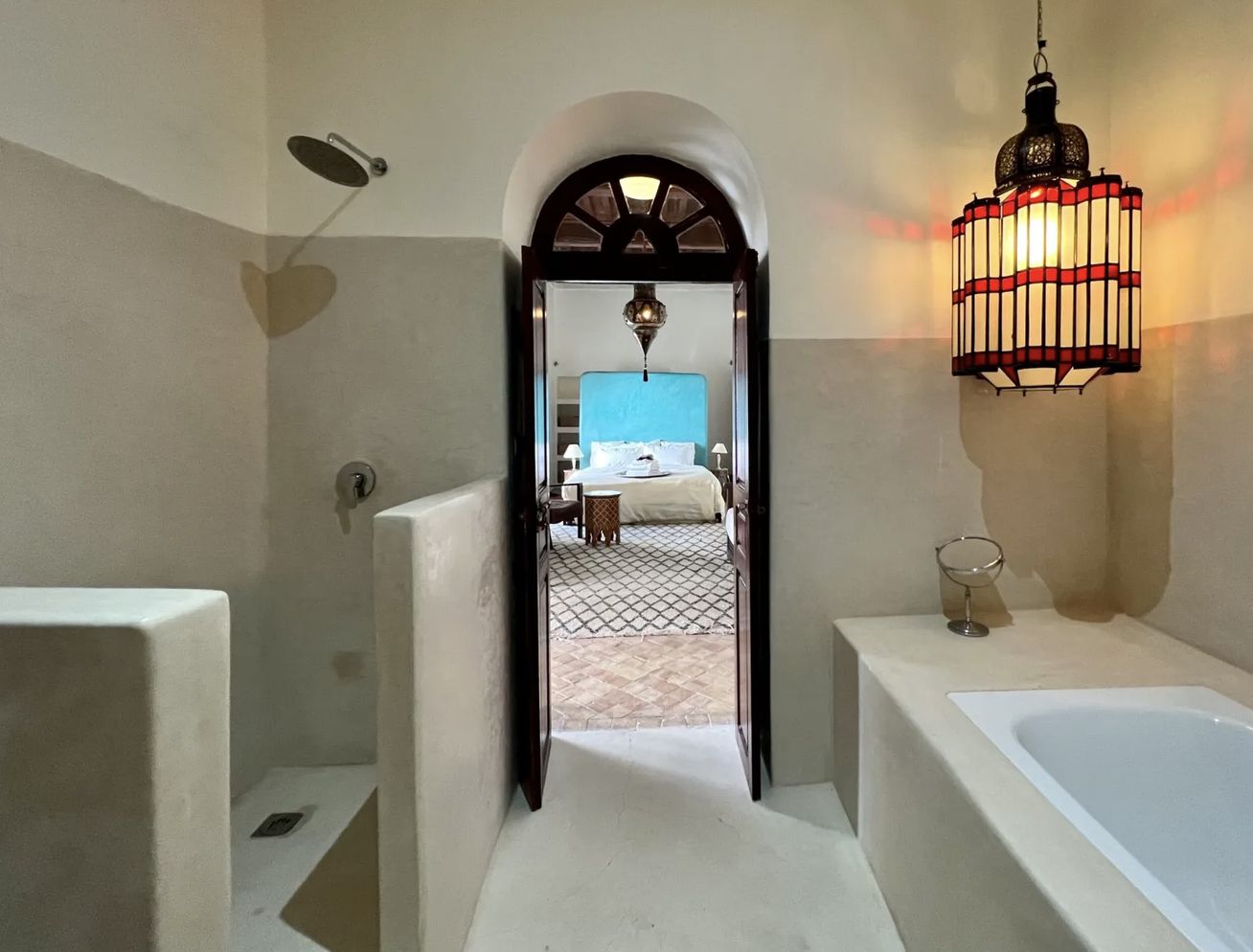
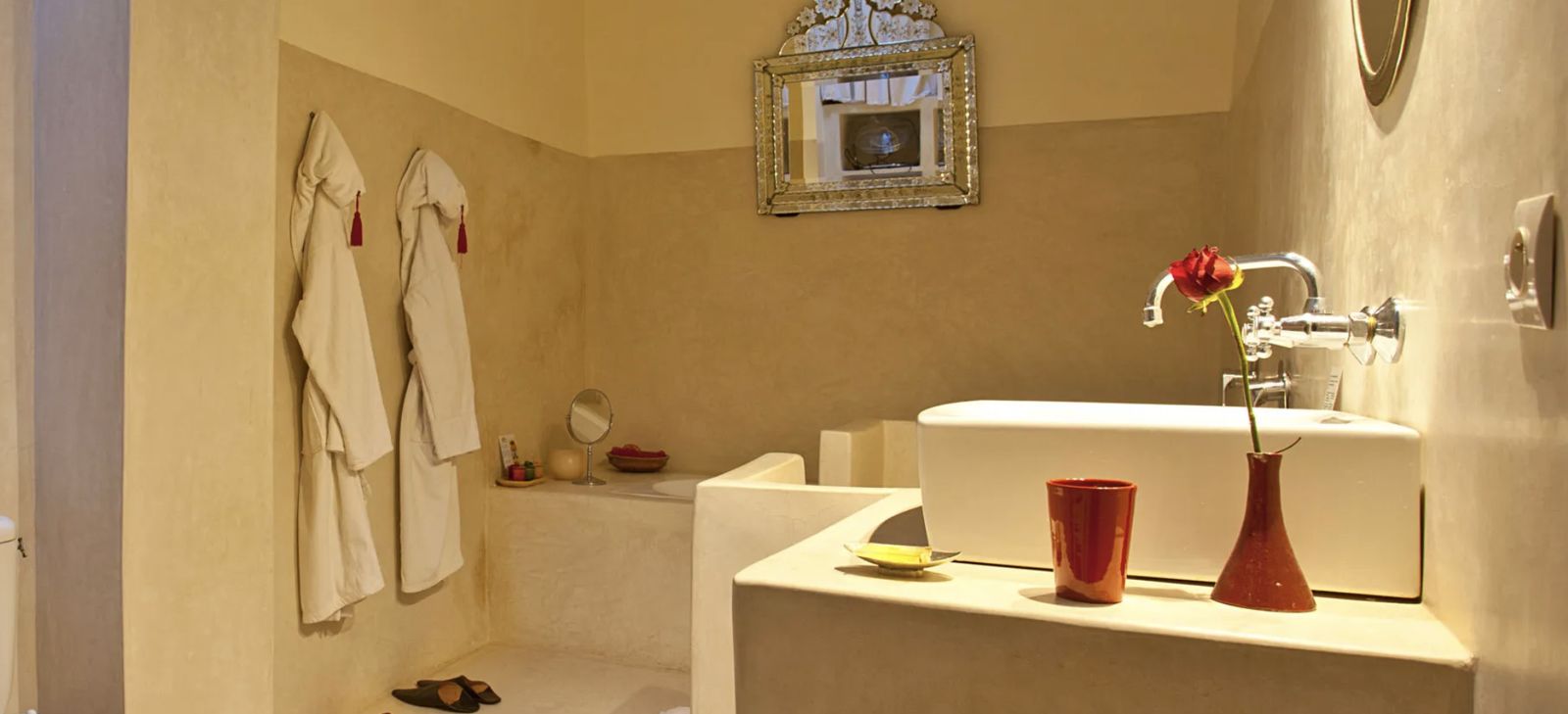
Nothing on Derb Gueraba tells you what is behind the door, which is the whole point of a riad: the house turns its back on the street and opens inward onto a courtyard. Riad Tizwa's is white on white - a herringbone floor of mixed marble, orange trees in clay jars, a low fountain scattered with rose petals - with an arcaded salon on one side and a gallery of white curtains and carved cedar balustrades running round the floor above. The bathrooms are done in tadelakt, the polished lime plaster of Marrakech, lit by coloured glass lanterns, and the roof terrace looks out over the medina.
The house sits in the Dar el Bacha quarter of the medina, on one of the quieter lanes of the old city, a short walk from the Dar el Bacha palace and around a quarter of an hour on foot from Jemaa el-Fnaa and the souks. Guests rate it very highly: 9.3 from 335 reviews on Booking.com and 4.8 on TripAdvisor (read October 2026). Tizwa runs a sister riad in the Fes medina.
The area
Marrakesh was founded around 1070 by the Almoravids, Berber nomads out of the Sahara, and it gave its name to the whole country - "Morocco" is the European ear's version of it. A century later the Almohads raised the Koutoubia Mosque, whose 77-metre minaret still sets the skyline and served as the model for the Giralda in Seville; the rule that no building in the medina stands taller than a palm tree keeps it in view from almost everywhere. The red pisé walls that give the "Red City" its name run for some 19 kilometres round a medina that has been a UNESCO World Heritage Site since 1985.
The heart of it is Jemaa el-Fnaa, a square that changes character by the hour: orange-juice stalls and henna artists in the morning, snake charmers in the afternoon, and after dark a field of smoking food stalls, storytellers and Gnawa musicians - UNESCO lists the square itself as intangible heritage. North of it, the souks sort themselves by trade: dyers, leather, lanterns, spices, carpets. Go with time to spare, bargain with good humour, and treat getting lost as part of the plan.
The monuments repay an early start before the heat and the crowds. The Ben Youssef Madrasa, a 16th-century Koranic school, is the city's finest piece of carved cedar, stucco and zellige tile. The Saadian Tombs were sealed off for centuries and only rediscovered in 1917. The Bahia Palace shows how a 19th-century grand vizier lived, while the ruins of the El Badi Palace, stripped by a later sultan, are now home to storks. For quiet, Le Jardin Secret restores a medina garden to its old layout, and the Jardin Majorelle - the cobalt-blue garden painted by Jacques Majorelle and later saved by Yves Saint Laurent and Pierre Bergé - sits beside the Musée Yves Saint Laurent in Gueliz. Dar el Bacha, a 1910s pasha's palace, is now a museum with a celebrated coffee house.
What else to do: a hammam scrub, in a traditional neighbourhood bath or a hotel spa; a sunset drink on a rooftop above the medina while the call to prayer moves from minaret to minaret; a cooking class that starts in the market; and a day out of town - the Ourika Valley and the High Atlas villages are about an hour away, the stony Agafay desert closer still. The best months are March to May and October to November. High summer is fiercely hot, and Christmas, New Year and Easter are peak season for prices.
The Atlas foothills south of the city took the worst of the September 2023 earthquake. The New York Times wrote a few months later that visiting is part of how the region recovers, and the medina is open as before.
Background: The New York Times, 36 Hours in Marrakesh by Seth Sherwood (February 2024).
What it costs through the year
| Cheapest we have seen | USD 124 ≈ €111 |
|---|---|
| What it usually costs | USD 177 ≈ €158 |
| Dearest we have seen | USD 252 ≈ €225 |
| Times we looked | 7 |
| Gap between the two | 72% |
| Last checked | 2026-11-04 |